
Choose pots with proper drainage
Drainage holes are non-negotiable for indoor succulent care. Unlike many houseplants, succulents store water in their leaves and stems, making them highly susceptible to root rot if their roots sit in standing water. Without a hole at the bottom, excess moisture from watering pools at the base of the container, creating an anaerobic environment that quickly kills the plant. Even if you use a decorative outer pot, the inner nursery pot must have drainage, or you should never water the plant directly in the container.
Terracotta and unglazed ceramic pots are the gold standard for succulents because the porous clay allows air and moisture to move through the walls. This evaporation helps the soil dry out between waterings, mimicking the arid conditions these plants evolved in. While glazed ceramic or plastic pots look nice, they retain moisture much longer, requiring you to water significantly less frequently and monitor the soil moisture more closely to avoid overwatering.


As an Amazon Associate, we may earn from qualifying purchases.
Select soil for maximum drainage
Succulent soil is not just regular potting mix with a different label. Standard potting soil retains moisture to support leafy houseplants, but that same moisture retention is fatal to succulents, which are adapted to arid environments. When the roots sit in wet, dense earth, they suffocate and rot. To keep your plants healthy, you need a medium that mimics their native habitat: gritty, fast-draining, and airy.
The composition of a proper succulent mix relies on inorganic materials like perlite, pumice, or coarse sand. These ingredients create air pockets that allow oxygen to reach the roots and let water flow through the pot quickly. When you water, the liquid should drain out of the bottom within minutes, leaving the soil slightly damp but never soggy. This rapid drying cycle is critical for preventing root rot, the most common cause of death for indoor succulents.
Choosing the right soil is the foundation of successful succulent care. If you buy a pre-mixed cactus and succulent potting soil, check the bag for high perlite or pumice content. If the mix feels dark and fine, it likely contains too much peat moss or vermiculite, which hold water. You can improve any store-bought mix by adding extra perlite or coarse sand to increase drainage speed. This simple adjustment can make the difference between a thriving plant and a mushy, decaying one.
| Feature | Standard Potting Mix | Succulent/Cactus Mix |
|---|---|---|
| Drainage Speed | Slow | Fast |
| Air Pockets | Few | Many |
| Primary Ingredient | Peat Moss/Coir | Perlite/Pumice/Sand |
| Best For | Leafy Houseplants | Succulents & Cacti |
Use precise watering tools
Indoor succulents are prone to rot not because they need too much water, but because we pour it too quickly or in the wrong place. Standard pitchers and cups make it easy to drench the entire pot, saturating roots that should stay relatively dry between sessions. Switching to specialized watering tools changes this dynamic, giving you the control needed to mimic the precise rainfall succulents receive in their native habitats.
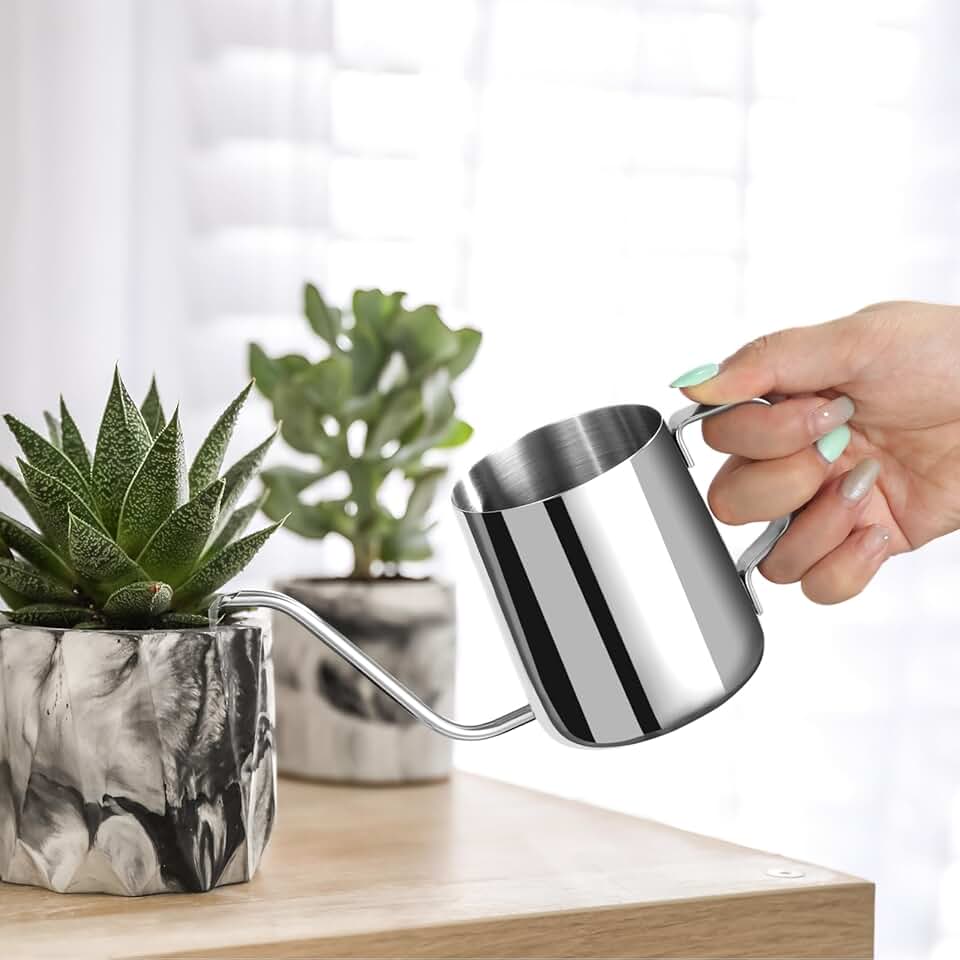
The gooseneck kettle is the most effective tool for this job. Its long, thin spout allows you to direct water exactly where it belongs—onto the soil surface and away from the plant’s crown. This precision prevents water from pooling in the leaf axils, a common cause of crown rot. By watering slowly in a circular motion, you ensure the soil absorbs moisture evenly without runoff, which is critical for plants stored in decorative catch pots.
For those who want to remove guesswork entirely, a soil moisture meter is an essential addition. Instead of relying on the "finger test" or a calendar schedule, you insert the probe into the soil to get a direct reading of internal moisture levels. This is particularly useful for succulents in opaque ceramic pots or deep containers where surface dryness can be misleading. It provides an objective data point, ensuring you only water when the roots actually need it.

As an Amazon Associate, we may earn from qualifying purchases.
Pick the right light for growth
Indoor succulents thrive in bright, indirect light. This means a spot that is bright enough to cast a clear shadow, but where the sun’s rays don’t hit the leaves directly. South-facing windows are generally the best choice, offering the most consistent illumination throughout the day.
Avoid placing plants directly against cold glass in the winter. The temperature drop can stress the roots. If your windows don’t get enough sun, or if you want to keep your collection in a darker room, a grow light is a practical solution.
Checklist for healthy succulents
Keeping indoor succulents alive comes down to a few consistent habits. The goal is to mimic their natural desert environment as closely as possible, focusing on light, drainage, and careful hydration.
Place your pots in a south or west-facing window. Succulents need at least six hours of sunlight daily. If leaves turn pale or stretch toward the glass, they are not getting enough light.
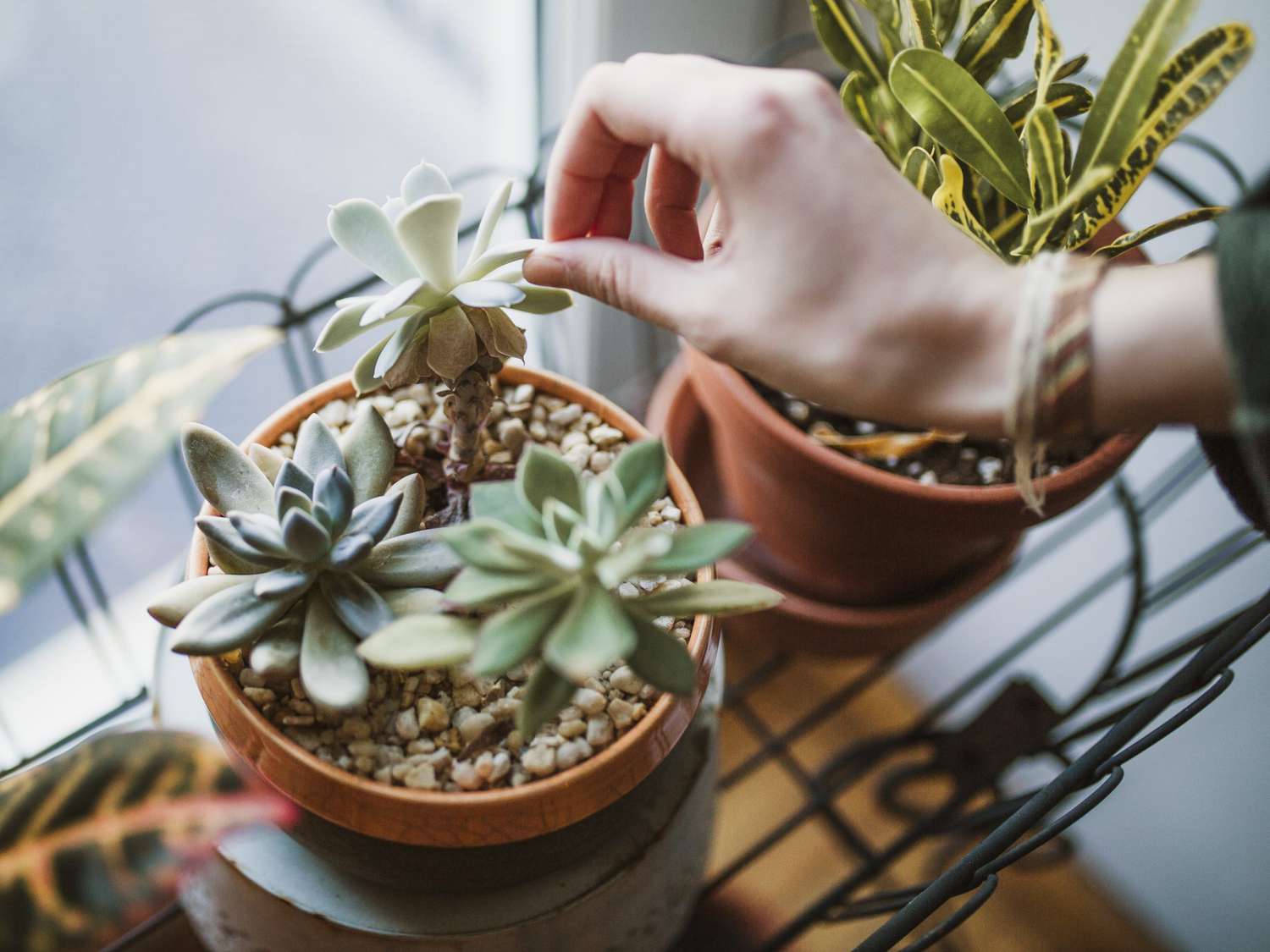
Stick your finger or a chopstick into the soil. Water only when the top half-inch is completely dry. Overwatering is the most common cause of rot, so it is better to underwater than to overwater.
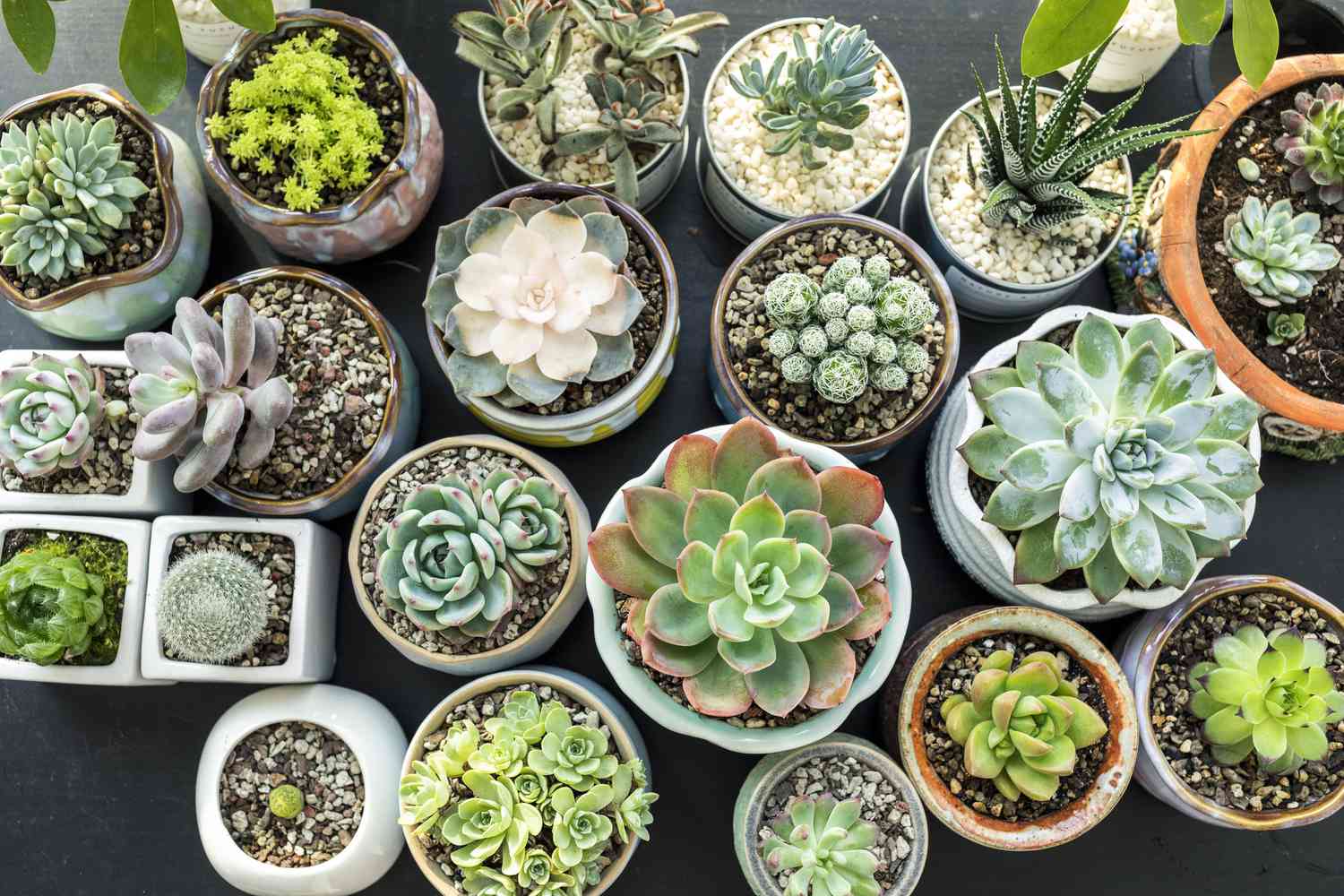
Ensure every pot has a drainage hole at the bottom. If your decorative pot lacks one, use a plastic nursery pot inside it to catch excess water and prevent root rot.
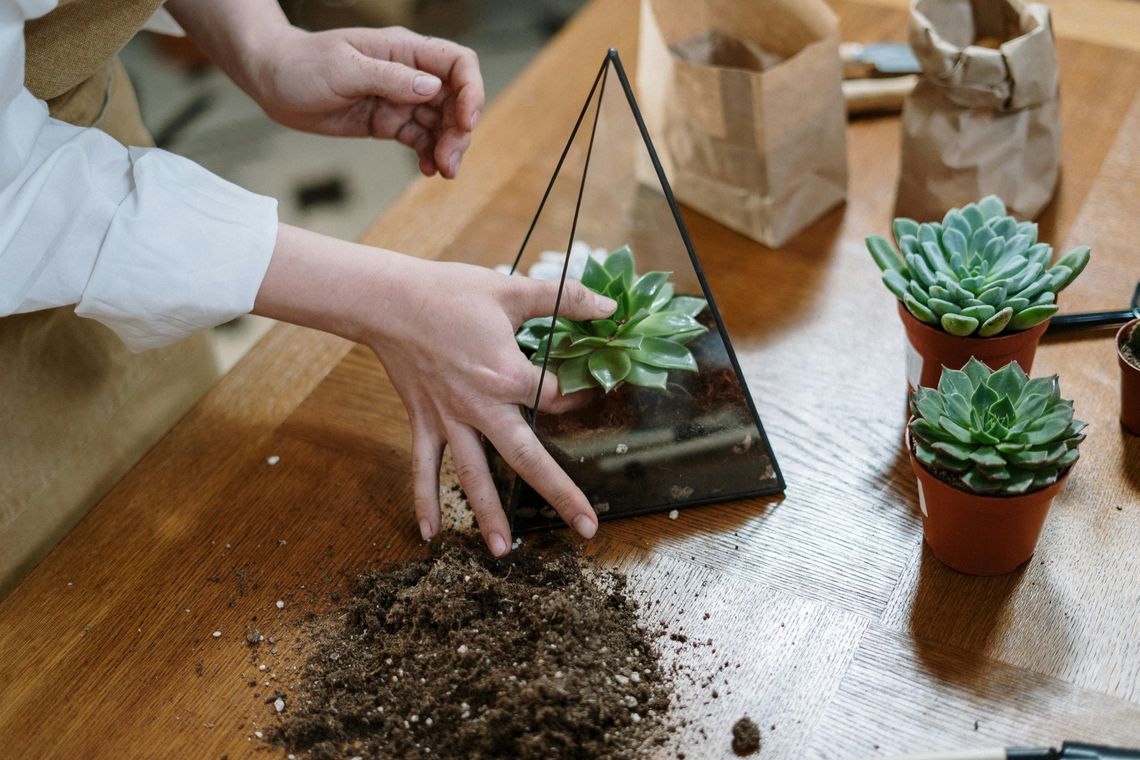
Standard potting soil holds too much moisture. Use a specialized cactus and succulent mix or add perlite to regular soil to improve aeration and drainage.
FAQs about indoor succulent care
How often should I water indoor succulents?
Watering on a strict schedule rarely works because it ignores seasonal changes and indoor humidity. Instead, wait until the soil is completely dry, then water lightly until it begins to drain from the bottom. Overwatering is the most common cause of failure; if you see little blisters forming on the leaves, you are watering too frequently.
Do succulents need direct sunlight?
Most indoor succulents thrive in bright, indirect light. A south-facing window is ideal, but avoid placing the pots directly against cold glass during winter, as the temperature shock can damage the leaves. If your plant is getting too much direct, harsh sun, the leaves may turn red or brown at the tips.
What is the best soil type for succulents?
Standard potting soil holds too much moisture and will suffocate succulent roots. You need a fast-draining mix specifically formulated for cacti and succulents. Look for blends containing perlite, pumice, or coarse sand to ensure water flows through quickly rather than sitting around the roots.
No comments yet. Be the first to share your thoughts!