

Succulents and the Watering Puzzle
Succulents have gained immense popularity, but keeping them thriving often presents a challenge. Ironically, the biggest issue isn’t usually underwatering, but quite the opposite—overwatering. These plants evolved in arid environments, storing water in their leaves, stems, and roots to survive long periods of drought. This natural adaptation means they're far more tolerant of being slightly dry than constantly moist.
That inherent resilience is why 'smart' watering solutions are becoming increasingly relevant. Simply watering when the soil feels dry isn’t always enough; factors like pot size, soil composition, plant species, and ambient temperature all play a role. The desire to automate plant care, even for seemingly straightforward succulents, is growing as people lead busier lives and seek to ensure their plants’ well-being.
We're seeing a surge in tools designed to take the guesswork out of succulent hydration. These fall into two main categories: soil moisture sensors that directly measure the water content in the soil, and apps that use algorithms to suggest watering schedules based on user input. Both aim to move beyond the subjective 'feel test' and provide more data-driven care. This article will explore both, and how they're evolving in 2026.
Soil Moisture Sensors: A Closer Look
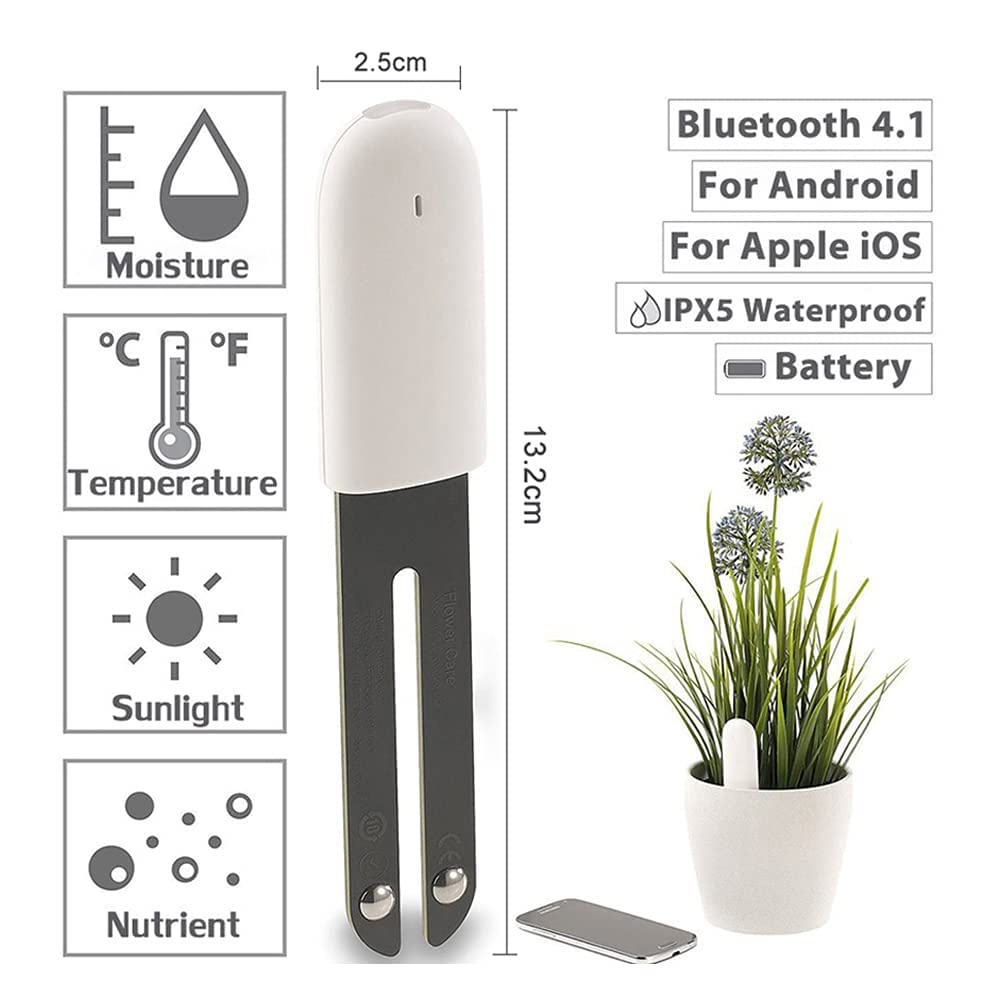
Soil moisture sensors are devices you insert into the soil to measure its water content. They come in two primary types: capacitive and resistive. Resistive sensors measure the electrical resistance between two probes – the more water, the lower the resistance. They are generally less expensive, but tend to corrode over time, shortening their lifespan and reducing accuracy.
Capacitive sensors, on the other hand, measure the dielectric permittivity of the soil, which is a measure of its ability to store electrical energy. Water has a high dielectric permittivity, so a higher water content results in a higher reading. These are more durable and provide more consistent readings, though they typically come with a higher price tag. I've found that capacitive sensors, while initially more expensive, offer better long-term value due to their reliability.
Many sensors connect to your smartphone via Bluetooth, allowing you to view readings directly in an app. Others utilize WiFi, enabling remote monitoring and data logging. The data provided is usually a percentage representing the soil moisture level, and some sensors also measure soil temperature. Accessing this data typically requires a dedicated app provided by the sensor manufacturer. The Xiaomi Mi Flora, for example, is a popular Bluetooth sensor, while the Vegetronix VH400 is a widely used WiFi option.
It’s important to remember that sensor accuracy isn't absolute. Soil composition, sensor placement, and even battery level can all influence readings. Regular calibration, as recommended by the manufacturer, is key to ensuring reliable data. Don't treat the sensor reading as gospel; always combine it with visual inspection of your plant.
App-Based Watering Guidance
Beyond the physical sensors, a growing number of apps aim to simplify succulent care by providing watering recommendations. These apps generally work by asking you to input details about your plant – its species, pot size, the type of soil it's planted in, and your location. Some even ask about the amount of sunlight the plant receives.
The app then uses an algorithm to calculate a suggested watering schedule. These algorithms are based on the known needs of different succulent species and the environmental factors you've provided. While convenient, these apps are only as accurate as the information you enter. Incorrectly identifying your plant or misreporting the amount of sunlight it receives will lead to inaccurate recommendations.
Several apps are beginning to bridge the gap between manual input and sensor data. Cheerful Plants, for instance, allows you to connect compatible soil moisture sensors for more precise watering alerts. These integrated systems offer the best of both worlds – the convenience of an app combined with the accuracy of real-time data. The trend is leaning towards AI-powered recommendations, where the app learns from your plant's responses and adjusts the watering schedule accordingly, but this technology is still in its early stages.
AI-Powered Succulent Care App Comparison - 2026
| App Name | Sensor Integration | Plant Database Size | Watering Recommendations (Accuracy) | User Interface (Ease of Use) | Price |
|---|---|---|---|---|---|
| Planta | Good | Excellent | Good | Excellent | Offers both free features and a premium subscription. |
| PictureThis | Limited | Excellent | Fair | Good | Subscription-based model with varying tiers. |
| Vera | Fair | Good | Good | Good | Freemium model with in-app purchases. |
| Blossom | Limited | Good | Fair | Good | Offers a free version and a premium subscription. |
| SmartPlant | Good | Good | Good | Fair | Subscription required for full features. |
Illustrative comparison based on the article research brief. Verify current pricing, limits, and product details in the official docs before relying on it.
Sensor and App Combinations: What Works?
Pairing the right sensor with the right app can significantly improve your succulent care routine. The Vegetronix VH400 WiFi sensor, for example, integrates seamlessly with PlantLink, offering detailed data visualization and customizable alerts. Users appreciate the VH400’s reliability and PlantLink’s user-friendly interface.
Another strong combination is the Xiaomi Mi Flora sensor paired with the Flower Power app (available on both iOS and Android). While the Mi Flora is a more basic sensor, the Flower Power app provides a wealth of information, including light levels, fertilizer levels, and temperature, in addition to moisture readings. However, be aware that the Mi Flora’s Bluetooth range can be limited, and the app sometimes experiences connectivity issues.
The Koubachi WiFi Plant Sensor is also well-regarded, particularly for its ability to learn your plant’s specific needs over time. It works with the Koubachi app, which provides personalized care recommendations. Some users have reported that the Koubachi sensor can be a bit finicky to set up, requiring a stable WiFi connection and careful placement. It’s always a good idea to check recent user reviews before investing in a combination.
Beyond Watering: Integrated Plant Health
Smart sensors and apps are increasingly offering more than just moisture monitoring. Many now track light levels, temperature, and humidity – all crucial factors influencing succulent health. A plant receiving insufficient light, for instance, will require less water than one in bright, direct sunlight.
These integrated systems provide a more holistic view of your plant’s environment. Apps like Planta and Vera provide comprehensive plant care advice, taking into account all these factors. They can even help diagnose potential problems based on the data collected. For example, a sudden drop in temperature combined with low light levels might indicate the plant is stressed and needs to be moved.
The ability to detect early signs of stress or disease is a significant advantage. By monitoring these parameters, you can identify potential issues before they become serious. This proactive approach can save your succulents from preventable problems and help them thrive. It’s a shift from reactive care – addressing problems as they arise – to preventative care – anticipating and mitigating potential issues.
DIY Smart Watering: A Feasible Option?
For those with some technical experience, building your own smart watering system is a viable, albeit more complex, option. This typically involves using a microcontroller like an Arduino or Raspberry Pi, a soil moisture sensor, a relay to control a water pump, and a power source.
The benefits of a DIY system include complete customization and potential cost savings. You can tailor the system to your specific needs and budget. However, it requires a significant time investment and a degree of technical skill. Troubleshooting can also be challenging, requiring knowledge of electronics and programming.
A basic setup would involve the sensor reading the soil moisture level, the microcontroller interpreting the data, and the relay activating the water pump when the soil is too dry. Several online tutorials, such as the ones found on Instructables and Hackster.io, provide step-by-step guides. But be warned: this isn’t a project for beginners. It’s best suited for those who enjoy tinkering and are comfortable with basic coding.
Troubleshooting and Common Pitfalls
Even with smart watering systems, things can go wrong. Sensor calibration is a frequent issue; sensors can drift over time, providing inaccurate readings. Regularly calibrating your sensor, as per the manufacturer’s instructions, is crucial. App connectivity problems are also common, especially with WiFi-based sensors. Ensure your sensor has a strong and stable WiFi signal.
Inaccurate readings can stem from various sources, including incorrect sensor placement, soil composition, and even battery level. Make sure the sensor is inserted properly into the root zone and that the batteries are fresh. Battery life is a concern with many sensors, so be prepared to replace them periodically.
It’s vital to remember that smart watering is a tool, not a replacement for observation. Regularly check your plants visually for signs of overwatering (yellowing leaves, mushy stems) or underwatering (shriveled leaves). Don’t blindly trust the sensor readings; use them as a guide, and always exercise your own judgment. A quick finger-test in the soil is still a worthwhile practice.
Looking Ahead: What’s Next for Smart Succulent Care?
The future of smart succulent care will likely see more sophisticated sensors capable of measuring additional parameters, such as nutrient levels and pH. AI algorithms will become more refined, learning from user feedback and adapting watering schedules with greater precision. Integration with smart home ecosystems, like Amazon Alexa or Google Home, will also become more common.
We can also expect to see more affordable and user-friendly DIY options, making smart watering accessible to a wider audience. Incremental improvements in sensor accuracy, battery life, and app usability will continue to drive innovation. While revolutionary changes aren’t on the immediate horizon, the technology is steadily evolving, making it easier than ever to keep your succulents happy and healthy.
No comments yet. Be the first to share your thoughts!