

Succulents and silicon
Most of us kill succulents by overwatering. We poke the soil and guess if it's dry enough, but by the time an echeveria looks sick, the roots are usually already gone. New sensors are finally making this guesswork unnecessary.
Generic plant monitors are mostly useless for succulents because they treat a cactus like a fern. We need tools that understand how these plants actually store water.
2026 isn’t some arbitrary year; it represents a likely inflection point. We’re seeing increased investment in precision agriculture and a growing demand for data-driven plant care solutions. The technology is maturing, costs are coming down, and the benefits are becoming increasingly clear. Expect to see a wave of new products and services designed specifically for succulent enthusiasts.
The promise is simple: move beyond subjective assessments and embrace objective data. Imagine a system that monitors your succulent’s soil moisture, light exposure, and temperature, then uses AI to determine the exact amount of water it needs, when it needs it. No more wilting, no more rot, just thriving succulents. This isn't science fiction – it's a rapidly approaching reality.
Why 'dry' isn't enough
The 'when it feels dry' rule is a decent starting point, but succulents aren’t a monolith. Their water needs are incredibly diverse. Understanding why they're finicky is the first step toward providing optimal care. It all comes down to their unique physiology and how they’ve adapted to arid environments.
Succulents store water in their leaves, stems, and roots, allowing them to survive prolonged periods of drought. Different species have vastly different capacities for water storage. A thick-leaved echeveria can withstand longer dry spells than a delicate sedum. The root systems also play a critical role. Some succulents have shallow, fibrous roots, while others have deep taproots.
But soil dryness isn't the only factor. Light levels significantly impact water needs. A succulent receiving bright, direct sunlight will use more water than one in a shaded location. Temperature and humidity also play a role; hotter, drier conditions necessitate more frequent watering. Even the pot material matters – terracotta pots are porous and allow for faster evaporation than plastic or glazed ceramic.
Drainage is the one thing you can't skip. If a smart system tells you to water but your pot doesn't have a hole in the bottom, the plant is still going to die. Current sensors don't account for poor drainage yet.
Current sensor options
The current market for soil moisture sensors is diverse, but few are specifically designed for succulents. Most are geared towards general gardening or agriculture, and their accuracy can be questionable when it comes to the unique needs of these plants. There are three main types of sensors commonly used: capacitive, resistive, and tensiometers.
Capacitive sensors measure the dielectric permittivity of the soil, which is related to its water content. They are generally more accurate than resistive sensors and less prone to corrosion, but they can be more expensive. Resistive sensors measure the electrical resistance of the soil; drier soil has higher resistance. These are cheaper but less reliable and can be affected by salinity.
Tensiometers measure the soil water tension, indicating how tightly water is held by the soil particles. They provide a more direct measure of plant-available water, but require regular maintenance and calibration. All three types have limitations. Accurately interpreting the data requires understanding soil composition, sensor placement, and the specific succulent species.
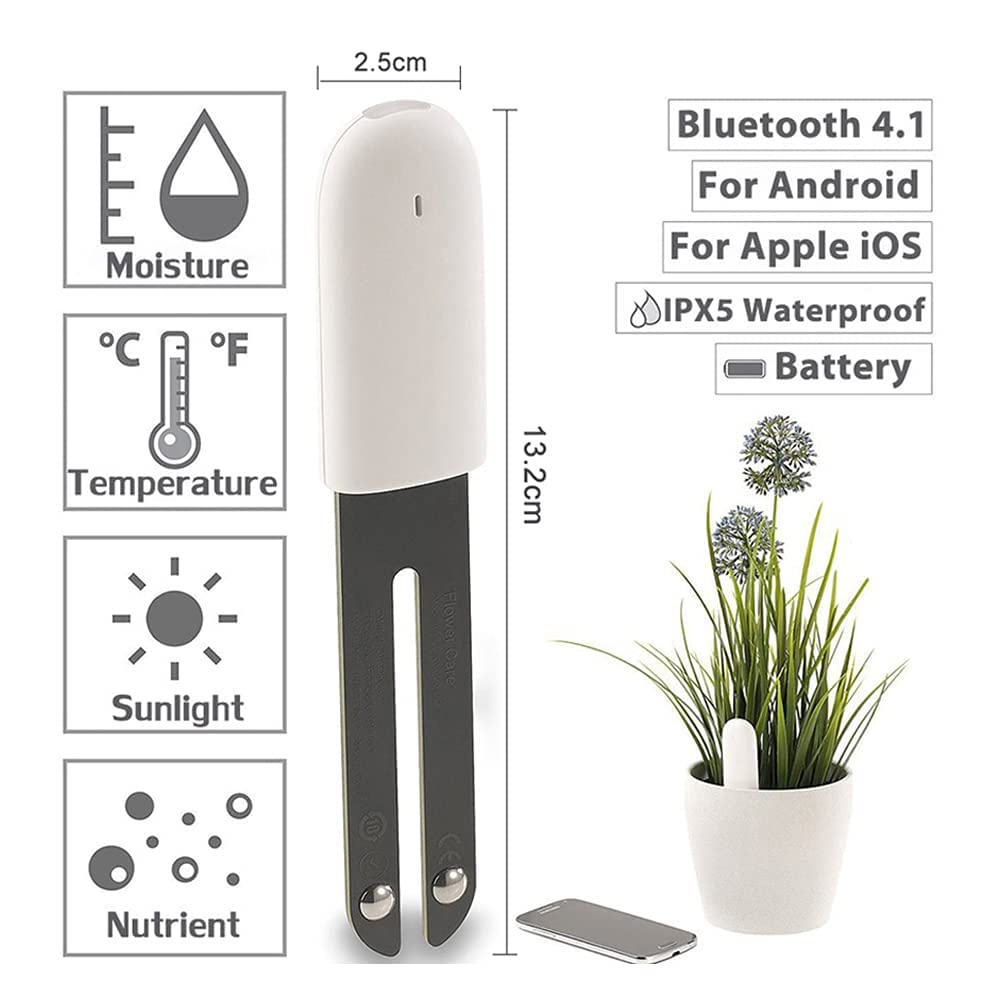
Several 'smart' plant monitors, like the Koubachi Wi-Fi Plant Sensor, claim to be suitable for succulents. However, reviews are mixed. Many users report inaccurate readings and a lack of customization options. They often rely on generic watering schedules rather than providing tailored recommendations. The Xiaomi Mi Flora is another option, but it also suffers from similar limitations. A truly effective system needs to go beyond simply measuring soil moisture.
Succulent Soil Moisture Sensor Comparison
| Sensor Type | Accuracy in Succulent Soil | Cost | Ease of Use | Maintenance |
|---|---|---|---|---|
| Capacitive | Good - Measures volumetric water content, sensitive to soil composition. | Moderate | Generally easy to integrate with microcontrollers and readily available. | Low - Minimal drift, but may require occasional cleaning. |
| Resistive | Moderate - Affected by salinity and soil type; less accurate than capacitive. | Lower | Simple to use, often found in basic soil moisture meters. | Moderate - Prone to corrosion over time, requiring replacement. |
| Tensiometer | Better for - Directly measures soil water tension, providing insight into water availability to the plant. | Higher | Requires careful installation and calibration; more complex setup. | Higher - Requires regular maintenance, including filling with water and potential bubble removal. |
| Dielectric (Frequency Domain Reflectometry - FDR) | Very Good - Less sensitive to salinity than resistive or capacitive sensors. | Higher | Requires specialized equipment and data interpretation. | Moderate - Periodic calibration recommended. |
| Time Domain Reflectometry (TDR) | Excellent - Considered a gold standard for soil moisture measurement, very accurate. | Very High | Complex setup and data analysis; typically used in research settings. | Moderate - Requires careful handling and occasional calibration. |
Qualitative comparison based on the article research brief. Confirm current product details in the official docs before making implementation choices.
How AI changes watering
The real breakthrough will come with the integration of AI and machine learning into succulent care. Imagine a system that doesn’t just tell you the soil is dry, but predicts when it will be dry, based on historical data, weather forecasts, and the plant’s growth stage. This level of precision is beyond the capabilities of current sensors and requires sophisticated algorithms.
AI-powered systems will combine data from multiple sensors – soil moisture, light intensity, temperature, humidity – with external data sources like local weather forecasts. They'll learn the unique water requirements of each succulent, taking into account its species, size, and microclimate. The system will adapt over time, becoming increasingly accurate as it gathers more data.
Automated watering systems will be a natural extension of this technology. Smart sprinklers or drip irrigation systems, controlled by AI, will deliver the precise amount of water needed, when it’s needed, directly to the roots. These systems will be able to adjust watering schedules based on changing weather conditions, preventing overwatering during rainy periods and providing extra moisture during heat waves.
The learning process is key. The AI won’t simply follow a pre-programmed schedule. It will continuously analyze data and refine its algorithms to optimize water delivery. For example, it might learn that a particular succulent prefers slightly drier conditions during the winter months or that a south-facing window requires more frequent watering than a north-facing one. This adaptation is what sets these systems apart.
Beyond Watering: Holistic Plant Health Monitoring
Smart succulent care won't stop at just watering. The future will see systems that monitor a wider range of plant health indicators, providing a more comprehensive assessment of overall well-being. Light intensity is a crucial factor, and sensors can measure PAR (Photosynthetically Active Radiation) to ensure succulents are receiving adequate light.
Temperature and humidity sensors will help identify potential stress factors. Succulents generally prefer moderate temperatures and low humidity. Monitoring these parameters can alert you to conditions that might be detrimental to their health. Early detection of pest infestations or diseases is another area where smart sensors can excel.
AI can analyze images of your succulents to identify visual cues of stress or disease. Image recognition technology can detect subtle changes in leaf color, shape, or texture that might indicate a problem. This allows for early intervention, preventing minor issues from escalating into serious problems. Joyusgarden.com emphasizes the importance of observing your plants regularly, and AI can assist with this process.
Imagine a system that not only monitors soil moisture but also identifies a mealybug infestation based on a visual scan of the plant. Or one that detects early signs of edema (water-soaked lesions on the leaves) based on humidity levels and watering patterns. These are the kinds of capabilities we can expect to see in the near future.
DIY vs. Integrated Systems: Building Your Smart Garden
Enthusiasts have two main options for implementing smart succulent care: building their own systems or purchasing a pre-built, integrated solution. The DIY approach involves using off-the-shelf sensors, microcontrollers (like Arduino or Raspberry Pi), and programming skills to create a custom monitoring and control system.
The advantage of the DIY route is customization. You have complete control over the hardware and software, allowing you to tailor the system to your specific needs and preferences. It’s also a more affordable option, especially if you already have some of the necessary components. However, it requires a significant investment of time and technical expertise.
Pre-built, integrated systems offer a more convenient and user-friendly experience. These systems typically include all the necessary hardware and software, and they are designed to be easy to set up and use. They often come with mobile apps that provide real-time data and alerts. But they are generally more expensive than DIY solutions.
The level of technical expertise required varies depending on the complexity of the system. A basic DIY setup might involve connecting a soil moisture sensor to an Arduino and writing a simple program to display the readings. A more advanced system might involve integrating multiple sensors, a weather API, and an automated watering system. Choosing the right approach depends on your skills, budget, and time constraints.
No comments yet. Be the first to share your thoughts!