
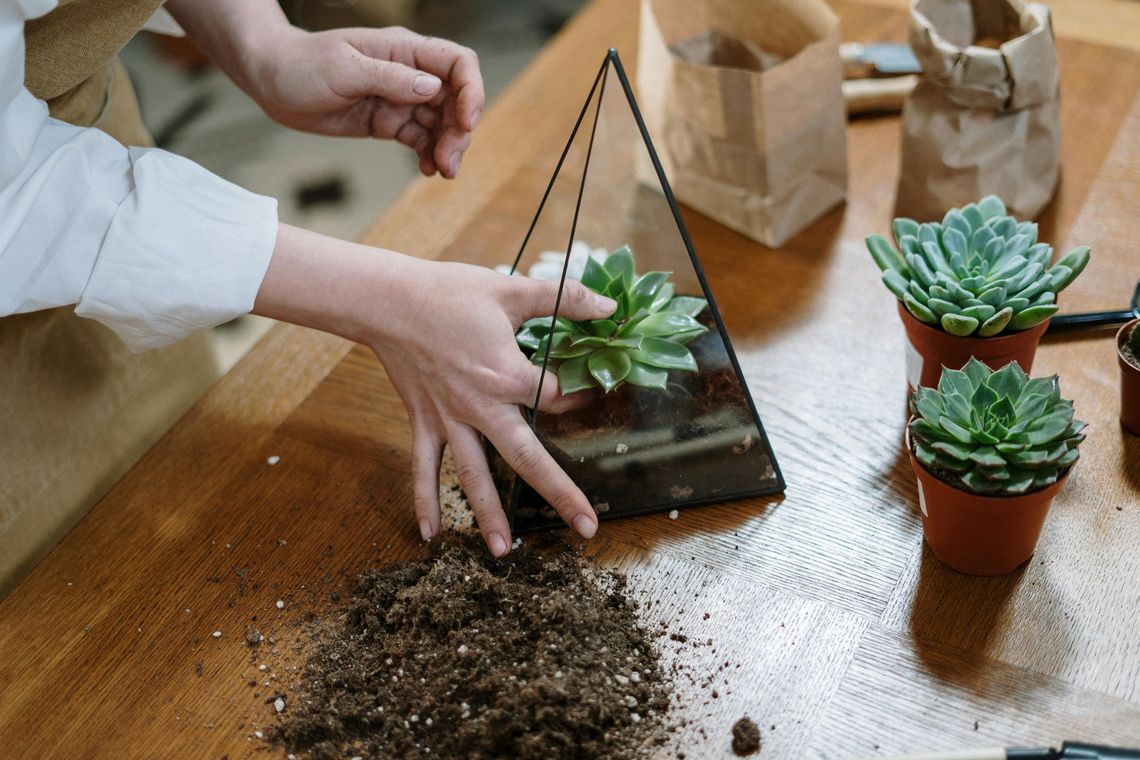
Start with the right soil mix
Standard potting soil is designed to hold moisture, which is the exact opposite of what succulents need. These plants evolved in arid environments to store water in their leaves and stems, making them highly susceptible to root rot if their roots sit in damp earth. Using a generic houseplant mix is the single most common mistake new growers make, often leading to yellowing leaves and mushy stems within weeks.
To keep your succulents healthy, you need a substrate that drains quickly and aerates the roots. The best approach is to use a specialized cactus and succulent potting mix as your base. These blends typically contain sand, pumice, and organic matter that mimics the dry, rocky terrain of desert environments. If you cannot find a dedicated mix, you can modify standard potting soil by adding 50% perlite or coarse sand to increase drainage significantly.
When selecting a soil product, look for ingredients like pumice, lava rock, or coarse sand rather than fine peat moss, which holds water too tightly. The goal is to create a gritty environment that dries out completely between waterings. This simple adjustment to your soil choice is more effective than any fertilizer or complex watering schedule in preventing the most common succulent killer: overwatering.
Choose pots with drainage holes
The single most important factor in keeping succulents alive is drainage. Without a hole at the bottom, water pools at the base of the container, turning the soil into a swamp that suffocates roots. This is the primary cause of root rot, a condition that kills succulents faster than neglect. Even if you buy the most expensive, hand-thrown ceramic planter, it is a death trap for your plant if it lacks drainage.
Decorative pots are often made of glass, metal, or sealed ceramic. These look beautiful on a shelf but are useless for growing. The solution is to use a "cache pot" method: keep the succulent in a standard nursery pot with a hole, and place that inside the decorative container. Alternatively, choose planters made from breathable materials that allow moisture to evaporate through the walls.
Best Pot Materials
Terracotta is the gold standard for succulents. The porous clay wicks excess moisture away from the soil, keeping the roots dry and airy. It is heavy enough to keep top-heavy plants stable and affordable. The only downside is that it dries out quickly, so you may need to water slightly more often than with plastic pots.
Glazed ceramic pots are a great compromise if you want color and style. Look for ones that explicitly state they have a drainage hole. The glaze seals the surface, so moisture stays in the soil longer than in terracotta, which can be helpful in dry climates.
Saucers are essential. Whenever you use a pot with a drainage hole, place it on a saucer to catch the water that runs out. This protects your furniture and floors from stains. Empty the saucer after watering; never let your succulent sit in a pool of standing water.


As an Amazon Associate, we may earn from qualifying purchases.
Watering Tools for Precise Control
Overwatering is the single most common reason succulents die. Unlike leafy houseplants that crave humidity, succulents store water in their leaves and stems, making them highly susceptible to root rot if the soil stays wet. The solution isn't just to water less, but to direct that water exactly where it needs to go: deep into the soil, away from the leaves and crown.
Using the right tool transforms a risky habit into a controlled routine. A standard cup or pitcher splashes water everywhere, often hitting the foliage and leaving puddles that evaporate slowly. Specialized watering tools allow for slow, targeted delivery, ensuring the roots get moisture while the rest of the plant stays dry. This precision is especially critical for rosette-forming succulents, where trapped water in the center can lead to rapid decay.
Gooseneck Watering Cans
A gooseneck can features a long, slender spout that extends well into the pot. This design lets you bypass the outer leaves and pour water directly onto the soil surface near the stem. The narrow opening restricts flow, preventing the high pressure that can displace soil or damage delicate roots. Many models come with a rose (a shower-head attachment) for even gentler distribution, though removing the rose often provides better control for large, mature pots.
Long-Nosed Precision Bottles
For small potted succulents or tight arrangements, a long-nosed bottle offers surgical precision. These glass or plastic bottles have a thin, curved tip that reaches deep into the soil without disturbing the plant. They are ideal for watering individual stems in a crowded tray or for adding water to the back of a shelf without knocking over other plants. The restricted opening ensures you release only small amounts at a time, making it easy to stop exactly when the soil is moist.
Moisture Meters
Tools are only as good as the information they provide. A moisture meter eliminates guesswork by measuring the water content in the soil. Insert the probe an inch or two down and read the scale; if it reads "dry" or "light," it is safe to water. If it reads "wet" or "dark," wait. This simple device prevents the habit of watering on a schedule, ensuring you only water when the plant actually needs it. It is the most reliable way to avoid the "little blisters" and mushy leaves that signal overwatering.


As an Amazon Associate, we may earn from qualifying purchases.
Lighting and placement essentials
Succulents thrive in bright, indirect light. A south-facing window is ideal, but keep the pots slightly away from the glass to avoid cold drafts in winter or scorching direct sun in summer. The light should be bright enough to cast a clear shadow, but not so intense that it bleaches the leaves.
For homes with darker corners or north-facing windows, a grow light bridges the gap. Full-spectrum LEDs mimic natural sunlight without adding excess heat. Place the light 6 to 12 inches above the foliage and run it for 12 to 14 hours a day to keep growth compact and vibrant.


As an Amazon Associate, we may earn from qualifying purchases.
Compare soil, pots, and tools side-by-side
Choosing the right equipment comes down to one non-negotiable factor: drainage. Without it, water pools at the bottom of the container, turning your succulent’s home into a swamp that leads to root rot. The table below breaks down the three essential categories—soil, pots, and watering tools—so you can pick the specific items that keep your plants healthy.
| Category | Recommended Item | Drainage Quality | Best Use Case |
|---|---|---|---|
| Soil | Cactus & Succulent Mix | High | Standard indoor pots |
| Soil | Perlite Amendment | Very High | Heavy clay soils |
| Pot | Unglazed Terracotta | Excellent | Preventing root rot |
| Pot | Ceramic with Hole | Good | Aesthetic displays |
| Tool | Gooseneck Watering Can | Controlled | Targeted watering |
| Tool | Self-Wicking System | Variable | Vacation care |
Soil acts as the foundation. A dedicated cactus mix provides the gritty texture succulents need to dry out quickly between waterings. If you are using regular potting soil, amend it with perlite to improve aeration. For pots, unglazed terracotta is the gold standard because the porous clay allows moisture to evaporate through the walls. If you prefer ceramic for its style, ensure it has a drainage hole at the bottom.
When it comes to watering, precision matters. A gooseneck watering can lets you direct water straight to the soil, avoiding the leaves where water can sit and cause fungal issues. Avoid glass jars or decorative cachepots without holes; they trap moisture and are the fastest way to kill a succulent. Focus on these three elements to keep your collection thriving.
Frequently asked: what to check next
How do you keep potted succulents alive?
Keep them in direct sunlight and water infrequently. Succulents are built for desert environments, so less is best. Use a pot with a drainage hole to let excess water escape, and avoid glass jars or containers that trap moisture at the bottom.
What are common succulent care mistakes?
Overwatering is the number one killer. Signs include yellowing, soft, or mushy leaves and stems. If the soil stays damp or you see mold, you are watering too often. Let the soil dry out completely between waterings.
How often should you water succulents?
Water only when the soil is completely dry. Do not follow a strict schedule. In winter, reduce watering significantly as growth slows. In summer, water more generously but still wait until the soil is bone dry.
Can succulents survive in low light?
They need bright, direct sunlight to thrive. Low light causes etiolation, where the plant stretches and becomes weak. Place them in a south-facing window or use a grow light if natural light is insufficient.
Why are my succulent leaves turning yellow?
Yellow leaves usually mean overwatering or poor drainage. Check the soil moisture and ensure the pot has a drainage hole. If the leaves are mushy, the plant may be rotting. Remove affected leaves and let the soil dry out completely.
No comments yet. Be the first to share your thoughts!